Ship the platform, not the prototype
A prototype gets a demo. A platform gets adopted. The difference is not the framework; it is boundaries, admin discipline, reliable handoff, and the willingness to delete shortcuts before they become policy.
The prototype tax
A prototype earns attention. A platform earns trust.
The prototype proves a screen can work. The platform proves the business can operate on it next month, next quarter, and under pressure. Those are different jobs, and they fail for different reasons.
Most teams do not get stuck because they picked the wrong framework. They get stuck because they shipped unclear boundaries and called the result speed.
Start with boundaries, not components
Before debating tools, decide what is allowed to change without coordination.
- What belongs inside one module or service?
- What becomes a contract shared by multiple parts of the product?
- What belongs in the boring layer every serious system needs: auth, roles, logs, billing, permissions, notifications, and release discipline?
If nobody can answer those questions in plain language, the codebase is still a prototype, even if the UI looks polished.
Build the operating layer early
Serious software becomes expensive when the basics arrive late.
The first credible version usually needs:
- clear user roles
- admin surfaces that real people can operate
- audit-friendly events
- controlled environments for staging and release
- documentation another team can inherit
None of this is glamorous. All of it is what makes the software real.
Delete what no longer fits
Founders and teams often protect early shortcuts because those shortcuts helped them move. That is understandable. It is also how prototypes become permanent accidents.
A senior build process includes the courage to delete the first thin abstraction, rewrite the part that no longer fits, and keep the business logic while removing the confusion.
The real question
Do you want software that demos well, or software your team can run without fear?
If the next build needs to become an internal platform, customer product, or handoff-ready operating layer, scope the boundaries before you scope the animations.
The CrysoLabs editorial desk - shipping notes from the build floor.
Keep reading
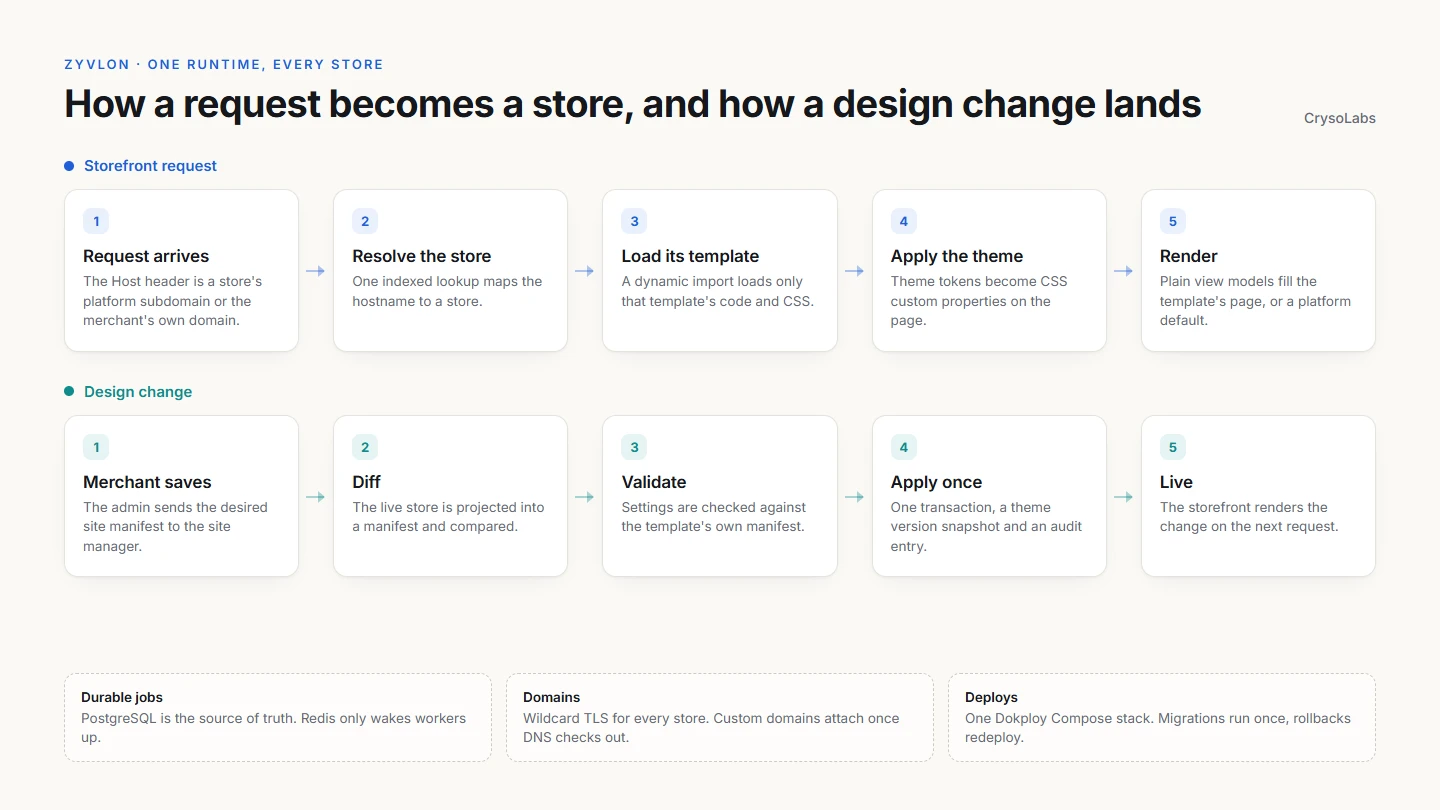
One runtime, every store: rebuilding Zyvlon as a multi-tenant commerce engine
Zyvlon's next generation serves every merchant from one storefront runtime. Stores are resolved by hostname, rendered by the template they chose, changed through declarative manifests, and deployed on Dokploy with wildcard domains, a durable job queue and a zero-reset migration from MongoDB.
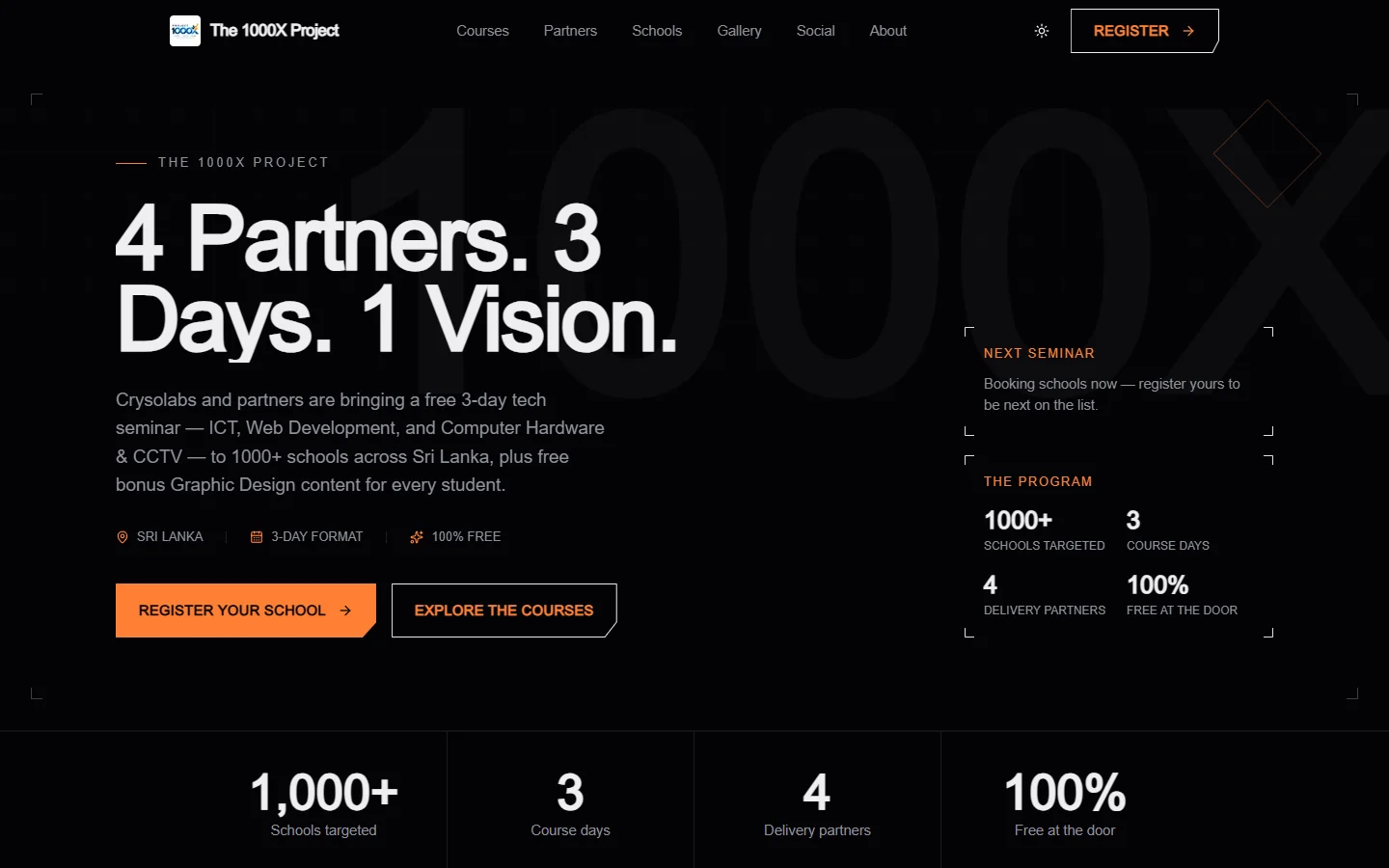
How we built The 1000X Project platform: one site for 1000+ schools
The 1000X Project takes a free tech seminar to more than 1000 schools across Sri Lanka. Here is how we built its platform: a public site, a school and student operations panel, a gallery and finance system, and a full LMS with exams, payments and verifiable certificates.